Official Confirmation Received: Blood Donation Deferral to Be Removed for Patients Treated by Registered Acupuncturists

The Association of Acupuncture Clinicians (AAC) & JAMA welcomes official confirmation from the Joint Professional Advisory Committee (JPAC) that the longstanding blood donation deferral following acupuncture is to be removed for patients treated by appropriately registered or licensed acupuncture practitioners across the UK.

On 4 August 2026, the AAC & JAMA received formal correspondence from JPAC, confirming that, following extensive consultation with the Department of Health and Social Care and the devolved administrations, the definition of a “qualified practitioner” will be expanded for the purposes of blood donor eligibility.

This means that, once implemented, people who have received acupuncture from practitioners registered or licensed in accordance with the legislation applicable in England, Scotland, Wales or Northern Ireland will no longer be automatically deferred from donating blood. Where there is any doubt about the practitioner’s registration or the use of sterile single-use needles, the existing four-month deferral will continue to apply as a precautionary measure.

A significant milestone

This formal confirmation represents the culmination of more than six years of sustained work by the AAC to secure a fair, evidence-based review of a policy that no longer reflected modern acupuncture practice.

Throughout this process, we have engaged directly with NHS Blood and Transplant, JPAC, the Advisory Committee on the Safety of Blood, Tissues and Organs (SaBTO), the Department of Health and Social Care, the Medicines and Healthcare products Regulatory Agency (MHRA) and the devolved administrations. This work has involved evidence gathering, legal advice, formal submissions, strategic meetings and continued engagement with decision-makers to ensure that the standards of modern acupuncture practice were properly recognised.

The official correspondence concludes by thanking the AAC for its engagement with JPAC throughout this process.

Working together

We are proud to be a member organisation of the Acupuncture Regulatory Authority (ARA), which has played an important coordinating role throughout this campaign.

We also recognise the invaluable contribution of Chris Davies, CEO of the AAC & JAMA, whose leadership has been instrumental in progressing this work over many years, together with Tony Dickinson of BAWMA, whose knowledge, persistence and support have been invaluable throughout the process.

This achievement reflects years of collaborative work across the ARA and its member organisations. While many practitioners and organisations will rightly welcome this outcome, it has been secured through sustained engagement, documentary evidence and constructive dialogue with government departments, regulators and advisory bodies over a period of more than six years.

What this means for patients

Once the updated guidance is implemented by the UK blood services, patients who have received acupuncture from appropriately registered or licensed practitioners will no longer face an automatic waiting period before donating blood simply because they have received acupuncture.

This is an important recognition of the high standards of education, regulation, infection prevention and patient safety that underpin modern acupuncture practice in the UK.

The updated JPAC guidance is due to be published on 11 August 2026, with implementation dates to follow within each UK nation.

We will continue to keep members informed as further information becomes available.

If you would like to understand more about the work undertaken by us over the past six years, including the evidence, correspondence and key milestones that contributed to this outcome, you can read our previously published timeline and statement here – Blood Donation and Acupuncture: A Current Update – JAMA

Share:

Facebook
Twitter
Pinterest
LinkedIn
On Key

Related Posts

When Regulation Protects – and When It Starts to Exclude

Regulation matters. In a profession like acupuncture, it should. Patients should be able to trust that the person treating them is competent, that infection prevention and control is taken seriously, that sharps and clinical waste are managed properly and that treatment takes place in a safe environment. The concern is not regulation itself, but what can happen when well-intentioned rules are interpreted in ways that create barriers which may never have been intended. That question has become particularly important in Wales following the introduction of the Special Procedures Licensing Scheme. The scheme has brought much-needed clarity around standards, accountability and public protection. But it has also exposed some practical difficulties, especially for small independent practitioners, shared clinical spaces and low-cost community services. Community acupuncture and access One of the clearest examples is community acupuncture. In 2023, I started a low-cost community acupuncture clinic from a local community centre in Pembrokeshire. The aim was simple: to make acupuncture more accessible to people who may not have been able to afford regular private treatment. For many people, acupuncture is not a one-off appointment. Treatment may continue over a number of weeks, and cost can quickly become the deciding factor. Community acupuncture offers another route into care. It does not replace private practice; it widens access. When the new licensing requirements came in, however, the model became increasingly difficult to sustain. Under the interpretation I was given at the time, the person responsible for the community venue would also need to take on additional responsibilities, including Level 2 infection prevention and control training and the cost of a premises licence. Together, those requirements came to around £600. For a community venue allowing an independent practitioner to use a room for only a few hours each week, that was understandably a significant commitment. The clinic closed, and the real loss was not simply a few hours of work. It was the disappearance of an affordable local service. As far as I am aware, no equivalent service has replaced it. That raises an important wider question: if a community clinic is safe, well-managed and appropriately supervised by a licensed practitioner, should there be a more proportionate route that allows it to continue? When shared premises become complicated The same issue can arise in another setting: practitioners renting treatment rooms inside shared premises. This is a common model across acupuncture, complementary healthcare and other small clinical businesses. A practitioner may rent one room within a larger building, remain entirely responsible for their own clinical work and have no involvement with the rest of the premises. Yet under some interpretations of the licensing requirements, the wider premises owner may be expected to take on additional responsibilities for a special procedure they neither perform nor supervise. For many landlords and clinic owners, that can be enough to make them decide not to rent the room at all. What appears to be a technical licensing issue can therefore have a very real effect on public access. If suitable rooms become harder to rent, practitioners have fewer places to work. If practitioners have fewer places to work, patients have fewer places to access treatment. That is why consistency matters. The contradiction that deserved closer attention One of the clearest contradictions in the current system is the relationship between clinic-based and mobile acupuncture. A practitioner may be able to provide mobile acupuncture following an appropriate risk assessment, yet establishing access to a dedicated treatment room can sometimes prove more difficult because of premises-licensing requirements. That is difficult to reconcile. A private home is an environment the practitioner does not fully control in advance. A dedicated clinical room can be assessed, equipped and organised specifically around infection prevention and control, with appropriate hand washing, cleanable surfaces, safe storage and a controlled treatment environment. If the more controlled environment becomes the more difficult option to establish, it is reasonable to ask whether the regulatory balance is working as intended. Looking across Wales This question became more significant when I contacted six different local authorities across Wales to understand how the same regulations were being interpreted. Several councils confirmed that it was possible, in principle, for an individual practitioner to rent a room within shared premises and take responsibility for that compliant treatment space, provided all relevant standards and licensing requirements were met. That raised a wider issue. If practitioners are working under the same national legislation, they should not be receiving fundamentally different answers depending on the local authority area in which they happen to practise. Licensing officers absolutely need discretion. Every building is different, every treatment room is different, and every application needs to be assessed on its own merits. But discretion should sit within clear and consistent national guidance. Practitioners need to know what is possible, landlords need to understand what they are responsible for, and patients should be able to trust that the same national scheme is being applied fairly and consistently. A positive clarification I wrote directly to Welsh Government setting out these concerns. Within three days, Welsh Government had contacted Pembrokeshire County Council and raised the matter. I later received direct correspondence confirming that the rules should be clear and consistent across Wales. I was also given confirmation that it was possible for a practitioner renting a room within shared premises to hold both their practitioner licence and the relevant premises licence, provided all required standards could be met. That clarification was important because it did not create a route around regulation; it clarified how practitioners could comply with it. For small independent practitioners, that distinction can make a significant difference. It means there can be a workable route for someone to take responsibility for the treatment space they actually use, without automatically requiring an unrelated landlord or business owner to accept responsibility for clinical procedures they do not carry out. I am genuinely delighted that practitioners in Pembrokeshire now have much clearer guidance and a far more workable path for everyone operating under the Special Procedures

From 2019 to 2026: How the AAC Helped Change UK Blood Donation Policy

Significant policy change rarely happens overnight. The removal of the four-month blood donation deferral for patients treated by licensed acupuncture practitioners is the result of more than six years of evidence gathering, collaboration and negotiation. Led by the Association of Acupuncture Clinicians (AAC), in collaboration with the Acupuncture Regulatory Authority (ARA) and Tony Dickinson (BAWMA), this work involved engagement with NHS Blood and Transplant, JPAC, SaBTO, the Department of Health and Social Care (DHSC), the Medicines and Healthcare products Regulatory Agency (MHRA) and the devolved health administrations across all four UK nations. Reaching agreement across so many organisations was a complex process, requiring each stage to be completed before the next could begin. The Timeline 2019: Following extensive discussions, NHS Blood and Transplant Service confirmed its support and agreement for removing the four-month waiting period for acupuncture. 2020: They successfully argued for, and passed, a formal medical review of acupuncture procedures and infection control standards in the UK. 2022: Agreement was obtained from JPAC (the Joint United Kingdom Blood Transfusion and Tissue Transplantation Services Professional Advisory Committee), which is responsible for advising on donor selection and safety. 2023: Agreement was secured from SaBTO (the Advisory Committee on the Safety of Blood, Tissues and Organs) to allow exemption from the waiting period for patients treated by practitioners registered with recognised acupuncture organisations. 2023: Agreement was reached in principle to abolish the four-month waiting period. 2024: Support for the revised position was confirmed by the Department of Health and Social Care (DHSC) and the Medicines and Healthcare products Regulatory Agency (MHRA). DHSC agreed to develop final recommendations for approval in consultation with the devolved health administrations. 2024: The devolved health administrations of all four UK nations were formally consulted and given the opportunity to raise objections. 2025: No objections were received from any of the four nations’ health departments. 2026: A proposed timeline has been agreed, with implementation of the revised guidelines expected by the end of Spring 2026. 2026: implementation agreed with changes to the JPAC website to represent these changes in August 2026 and that exemption for licenced acupuncturists will be allowed and rolled out from this date by the relevant blood service. While timelines can be subject to delay, the most significant and complex work has now been completed. The key thing is that due to our negotiations agreements have been reached across multiple departments of health and all four devolved administrations. This represents a major shift never accomplished before and places the profession in a strong position as the final stages of implementation proceed. A Landmark Achievement The most significant and complex stages of this work have now been completed. Through years of constructive negotiations, agreement was secured across multiple departments, advisory committees and all four devolved administrations—something never previously achieved for the acupuncture profession. This landmark achievement reflects the dedication of everyone involved and demonstrates what can be accomplished through evidence-based advocacy, collaboration and persistence. The AAC is proud to have led this work alongside the Acupuncture Regulatory Authority (ARA) and Tony Dickinson (BAWMA), helping to secure one of the most significant policy developments for the profession in recent years. The successful implementation of this change is not only a victory for licensed acupuncture practitioners and their patients, but also an important recognition of the high standards of modern acupuncture practice across the UK.

Official Confirmation Received: Blood Donation Deferral to Be Removed for Patients Treated by Registered Acupuncturists

The Association of Acupuncture Clinicians (AAC) & JAMA welcomes official confirmation from the Joint Professional Advisory Committee (JPAC) that the longstanding blood donation deferral following acupuncture is to be removed for patients treated by appropriately registered or licensed acupuncture practitioners across the UK. On 4 August 2026, the AAC & JAMA received formal correspondence from JPAC, confirming that, following extensive consultation with the Department of Health and Social Care and the devolved administrations, the definition of a “qualified practitioner” will be expanded for the purposes of blood donor eligibility. This means that, once implemented, people who have received acupuncture from practitioners registered or licensed in accordance with the legislation applicable in England, Scotland, Wales or Northern Ireland will no longer be automatically deferred from donating blood. Where there is any doubt about the practitioner’s registration or the use of sterile single-use needles, the existing four-month deferral will continue to apply as a precautionary measure. A significant milestone This formal confirmation represents the culmination of more than six years of sustained work by the AAC to secure a fair, evidence-based review of a policy that no longer reflected modern acupuncture practice. Throughout this process, we have engaged directly with NHS Blood and Transplant, JPAC, the Advisory Committee on the Safety of Blood, Tissues and Organs (SaBTO), the Department of Health and Social Care, the Medicines and Healthcare products Regulatory Agency (MHRA) and the devolved administrations. This work has involved evidence gathering, legal advice, formal submissions, strategic meetings and continued engagement with decision-makers to ensure that the standards of modern acupuncture practice were properly recognised. The official correspondence concludes by thanking the AAC for its engagement with JPAC throughout this process. Working together We are proud to be a member organisation of the Acupuncture Regulatory Authority (ARA), which has played an important coordinating role throughout this campaign. We also recognise the invaluable contribution of Chris Davies, CEO of the AAC & JAMA, whose leadership has been instrumental in progressing this work over many years, together with Tony Dickinson of BAWMA, whose knowledge, persistence and support have been invaluable throughout the process. This achievement reflects years of collaborative work across the ARA and its member organisations. While many practitioners and organisations will rightly welcome this outcome, it has been secured through sustained engagement, documentary evidence and constructive dialogue with government departments, regulators and advisory bodies over a period of more than six years. What this means for patients Once the updated guidance is implemented by the UK blood services, patients who have received acupuncture from appropriately registered or licensed practitioners will no longer face an automatic waiting period before donating blood simply because they have received acupuncture. This is an important recognition of the high standards of education, regulation, infection prevention and patient safety that underpin modern acupuncture practice in the UK. The updated JPAC guidance is due to be published on 11 August 2026, with implementation dates to follow within each UK nation. We will continue to keep members informed as further information becomes available. If you would like to understand more about the work undertaken by us over the past six years, including the evidence, correspondence and key milestones that contributed to this outcome, you can read our previously published timeline and statement here – Blood Donation and Acupuncture: A Current Update – JAMA
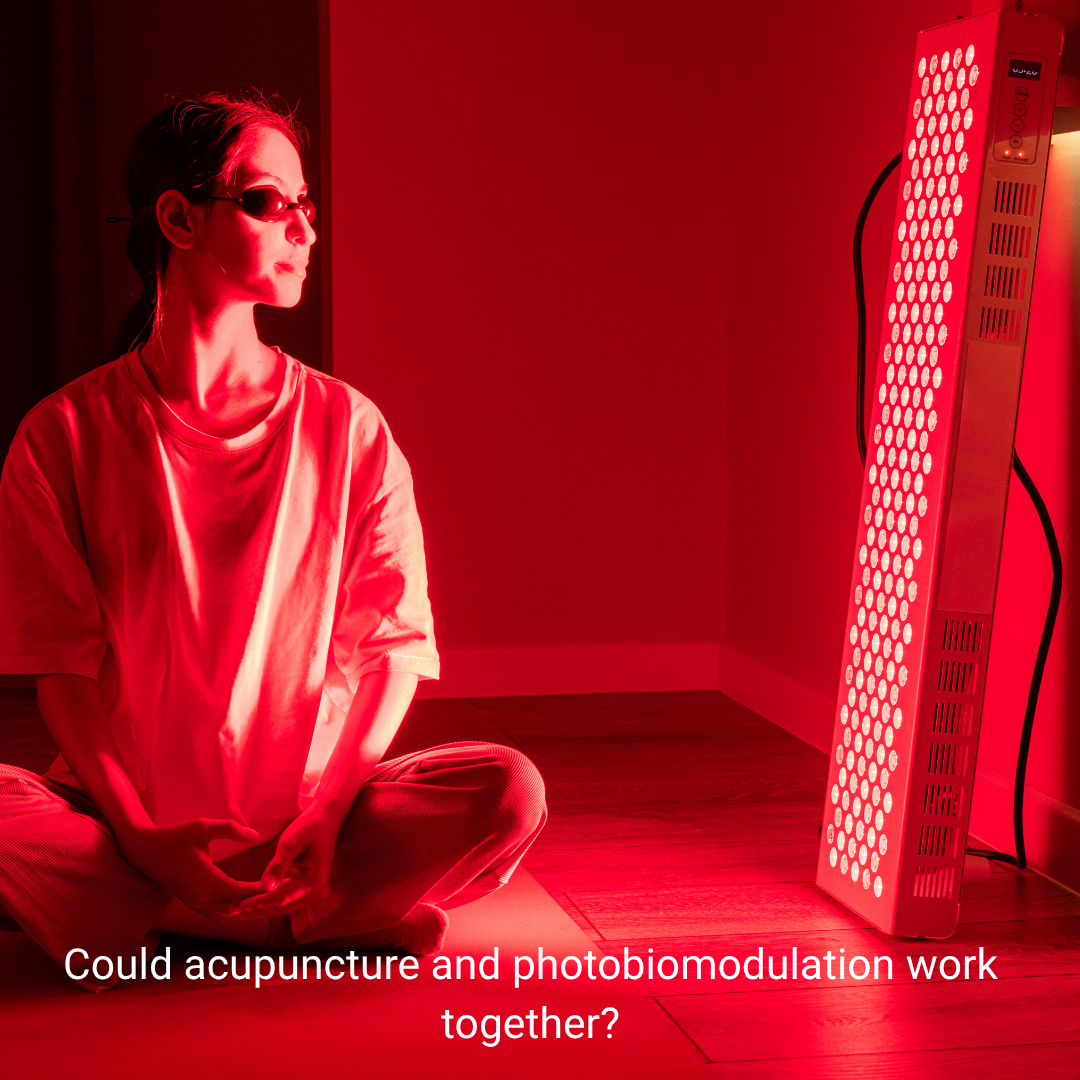
Could acupuncture and photobiomodulation work together? Exploring an emerging approach to patient care

As healthcare continues to evolve, so too does acupuncture practice. While acupuncture has been used for thousands of years to support health and wellbeing, many practitioners continue to explore how modern technologies may complement traditional techniques and enhance patient care. One area attracting increasing interest is photobiomodulation (PBM), sometimes referred to as light therapy. Although often associated with aesthetics, photobiomodulation is being explored across a much wider range of healthcare applications, including pain management, injury rehabilitation, tissue recovery and skin health. For some acupuncturists, it offers another therapeutic option that may be incorporated into an individualised treatment plan alongside acupuncture. What is photobiomodulation? Photobiomodulation uses specific wavelengths of light to interact with the body’s tissues and support normal cellular processes. Unlike treatments that generate heat, photobiomodulation uses low-level light energy. Different wavelengths are being investigated for different purposes: Research into photobiomodulation continues to grow, with studies exploring how it may be used across a variety of healthcare settings. Why are some acupuncturists incorporating photobiomodulation into practice? Acupuncture has always evolved alongside advances in healthcare. Today’s practitioners combine traditional knowledge with modern clinical understanding to provide personalised care based on each patient’s individual needs. Photobiomodulation is one example of this evolving practice. Rather than replacing acupuncture, some practitioners are choosing to use light therapy alongside traditional acupuncture techniques where they believe it may complement their clinical approach. Although acupuncture and photobiomodulation work in different ways, both aim to support the body’s natural healing processes. Acupuncture stimulates carefully selected points based on a detailed clinical assessment, while photobiomodulation delivers targeted wavelengths of light to specific tissues. For practitioners who combine the two, the goal is to create an integrated treatment approach that supports recovery, wellbeing and overall patient care. Importantly, the technology never replaces clinical expertise. Assessment remains at the heart of acupuncture practice, ensuring that treatment is tailored to the individual rather than following a one-size-fits-all approach. Supporting pain management and injury recovery Pain is one of the most common reasons people seek acupuncture treatment, whether for musculoskeletal conditions, sports injuries or persistent pain. Photobiomodulation is also being investigated for its potential role in supporting pain management, reducing inflammation and promoting tissue repair. Because near-infrared wavelengths penetrate deeper into tissues than visible light, some practitioners incorporate them alongside acupuncture when working with muscles, tendons and other soft tissues. For patients recovering from injury, surgery or ongoing musculoskeletal problems, combining acupuncture with photobiomodulation may form part of a broader rehabilitation plan designed to support recovery and help people return to their daily activities. As with acupuncture, treatment decisions are based on individual assessment, health history and clinical goals. No two treatment plans are exactly the same. Facial acupuncture and photobiomodulation Facial acupuncture has grown in popularity as more people seek approaches that support healthy skin and overall wellbeing. While facial acupuncture is often associated with aesthetics, it remains rooted in the principles of traditional acupuncture. Treatment involves a detailed assessment of the individual, considering their overall health as well as their concerns about the skin. Healthy skin depends on many factors, including circulation, tissue health, inflammation, lifestyle, sleep, nutrition and the body’s natural repair processes. Some practitioners are exploring how photobiomodulation may complement facial acupuncture by supporting these natural processes. Research is continuing into the potential role of different wavelengths: For practitioners who combine facial acupuncture with photobiomodulation, the aim is not simply cosmetic enhancement. Instead, the focus is on supporting healthier skin while taking a holistic view of each person’s health and wellbeing. As with all healthcare treatments, responses vary between individuals. Outcomes are influenced by many factors, including age, lifestyle, overall health, skincare routine and the personalised treatment plan developed by the practitioner. Looking to the future The profession continues to evolve as practitioners explore how traditional acupuncture approaches may sit alongside emerging technologies. Photobiomodulation is one example of how some acupuncturists are expanding their clinical toolkit while maintaining the core principles of personalised, patient-centred care. As research continues to develop, conversations around integrated approaches to healthcare are likely to grow. For patients, this means having informed discussions with qualified practitioners about the treatment options that may be appropriate for their individual needs. At JAMA, we welcome thoughtful discussion around innovation in acupuncture practice and the ways practitioners continue to combine clinical expertise, traditional knowledge and emerging research to support the people in their care. We’d love to hear from our members:Are you incorporating photobiomodulation into your acupuncture practice? How are you using it alongside your treatments?

You’re Never Practicing Alone

For many practitioners, one of the greatest rewards of working in complementary healthcare is the opportunity to make a real difference to people’s lives. But alongside that comes a challenge that many of us know all too well—working alone. Whether you’re running your own clinic, renting a treatment room, or working as a sole practitioner, it’s easy to go days without seeing another therapist. While independence brings flexibility, it can also feel isolating. At JAMA, we believe that professional membership should be about more than insurance, CPD, and professional support. It should be about community. Why We Created Our Regional WhatsApp Groups Our regional WhatsApp groups were created with one simple aim: to help JAMA members connect with one another. These groups provide a welcoming space where members can: Sometimes it’s not about finding the answer to a clinical question—it’s simply about knowing there’s someone nearby who understands the unique experience of being a practitioner. Bringing Our Community Together We’re delighted that our very first regional meet-up is taking place with our London & East of England WhatsApp Group. Members have organised an informal afternoon in London to enjoy food, drinks, and conversation—a chance to put faces to names, strengthen existing connections, and welcome new ones. This is exactly what we hoped these groups would inspire. Professional relationships don’t always begin in a classroom or at a conference. Sometimes they begin over a coffee, a shared meal, or a conversation that starts with, “How’s clinic been this week?” More Than Membership One of the greatest strengths of JAMA is our community. Our members support one another through shared knowledge, encouragement, collaboration, and friendship. Together, we create a network where practitioners can learn, grow, and feel supported throughout their professional journey. As our regional groups continue to grow, we hope to see many more local meet-ups taking place across the UK. Whether it’s a coffee morning, an evening meal, a CPD study group, or a walk in the park, every gathering strengthens the connections that make our profession so special. You’re Never Practicing Alone Being self-employed doesn’t have to mean being isolated. When you become part JAMA, you become part of a community of practitioners who are there to support one another—professionally and personally. JAMA provides the community. Our members make it thrive. And together, we’re building something special.