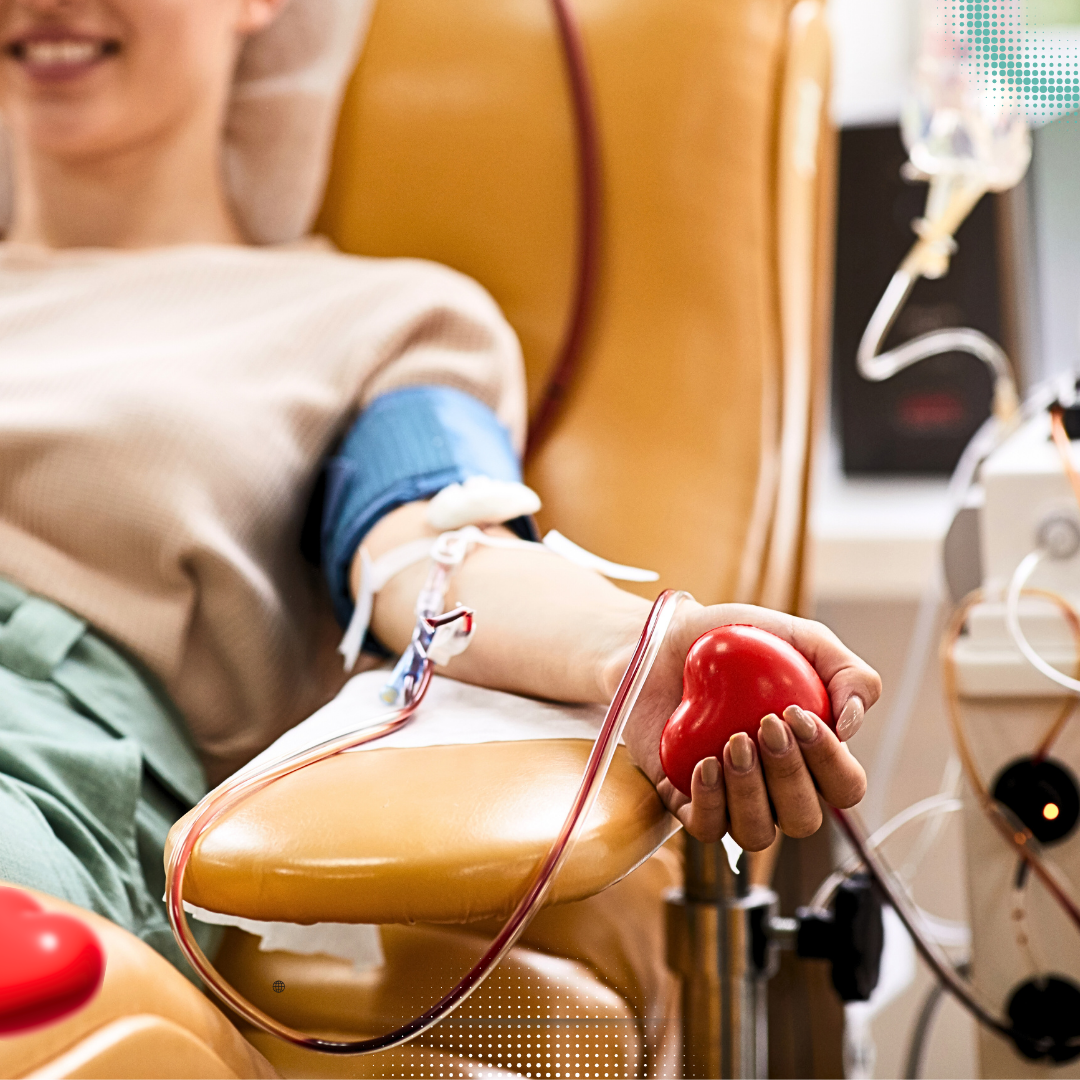
Blood Donation and Acupuncture: A Current Update

Message from Chris Davies CEO

The current NHS Blood and Transplant position is that anyone who has received acupuncture must wait four months before donating blood. This waiting period was originally introduced to allow sufficient time for any blood-borne viruses to become detectable through post-donation screening.

This policy was put in place many years ago following a serious incident involving the re-use of acupuncture needles that had not been adequately sterilised. While appropriate at the time, this position has remained unchanged despite the fact that acupuncture practice, regulation, and infection control standards in the UK have evolved significantly since then.

Modern acupuncture practice uses single-use, sterile needles as standard, alongside stringent hygiene, health, and safety procedures supported by robust professional training. As a result, the risk associated with acupuncture is now among the lowest of all invasive procedures carried out in the UK.

We have been committed to pursuing this issue fully and persistently. This was not a short-term engagement, but a sustained process of escalation, evidence-building, and negotiation. The work in this area was always undertaken not only for its own members, but for the profession as a whole.

The AAC has a long-standing record of actively advocating for practitioners and its members and has collaborated in the past with other organisations towards mutual aims, including successfully securing permission for acupuncture services to remain open throughout all COVID lockdowns. This same commitment has underpinned our approach to blood donation policy.

For the past six years, the AAC has been actively involved in challenging the four-month deferral period. This has included engaging legal counsel, responding to repeated procedural barriers, and pressing for review at every appropriate level, even where progress was slow or repeatedly delayed.

Key milestones in this process include:

2019: Following extensive discussions, NHS Blood and Transplant confirmed its support for removing the four-month waiting period for acupuncture.

2020: Successfully argued for, and passed, a formal medical review of acupuncture procedures and infection control standards in the UK.

2022: Agreement was obtained from JPAC (the Joint United Kingdom Blood Transfusion and Tissue Transplantation Services Professional Advisory Committee), which is responsible for advising on donor selection and safety.

2023: Agreement was secured from SaBTO (the Advisory Committee on the Safety of Blood, Tissues and Organs) to allow exemption from the waiting period for patients treated by practitioners registered with recognised acupuncture organisations.

2023: Agreement was reached in principle to abolish the four-month waiting period.

2024: Support for the revised position was confirmed by the Department of Health and Social Care (DHSC) and the Medicines and Healthcare products Regulatory Agency (MHRA). DHSC agreed to develop final recommendations for approval in consultation with the devolved health administrations.

2024: The devolved health administrations of all four UK nations were formally consulted and given the opportunity to raise objections.

2025: No objections were received from any of the four nations’ health departments.

2026: A proposed timeline has been agreed, with implementation of the revised guidelines expected by the end of Spring 2026.

While timelines can be subject to delay, the most significant and complex work has now been completed. The key thing is an Agreement has been reached across multiple departments of health and all four devolved administrations. This represents a major shift and places the profession in a strong position as the final stages of implementation proceed.

The AAC would like to acknowledge Tony Dickenson of BAWMA, who secured the initial agreement from NHS Blood and Transplant, along with all members of the AAC and ARA team and external legal advisors who have contributed to this bringing this to fruition.

Although the milestones above appear concise, progress has been achieved through sustained, detailed, and often demanding engagement, including regular strategic meetings, legal consultation, and continued escalation where earlier efforts had stalled.

Every possible avenue was explored, and pressure applied where necessary, to overcome repeated delays, unanswered correspondence, and assertions that change was impossible due to legislation. This outcome reflects what can be achieved through persistence, collaboration, and a clear commitment to advancing the profession in the interests of both practitioners and the public.

What This Means in Practice for Practitioners and Patients

Once the revised guidelines are implemented, patients who have received acupuncture from practitioners registered with recognised professional acupuncture organisations will no longer be subject to an automatic four-month deferral period when donating blood. This brings blood donation policy into alignment with modern acupuncture practice and current infection control standards.

For practitioners, this represents formal recognition of the safety, professionalism, and regulatory standards upheld across the profession. It also removes an outdated barrier that has long affected patient confidence and public perception.

For patients, it means greater clarity and fairness. Receiving acupuncture will no longer unnecessarily exclude otherwise eligible donors from giving blood, supporting both individual choice and the wider needs of the NHS blood supply.

The AAC will continue to keep members informed as final guidance is issued and implementation progresses.

I first took on this issue in 2020 and, after several years of work, we are now very close to achieving the outcome we have been aiming for.

It has been a complex process, but it is something our members have consistently asked us to address. Throughout this time, AAC has remained committed to engaging proactively and working through the appropriate channels to help move the issue forward.

While it would have been possible to seek an exemption for AAC alone, we felt it was important to pursue a solution that benefits the wider profession rather than just one organisation. Our aim has always been to see the rule itself reviewed so that the outcome is fairer for all acupuncturists.

We will continue supporting the final stages of the rollout and advocating for the removal of the waiting period so the full benefits of these changes can be realised.

Thank you to everyone who has supported this work and continued to raise the importance of the issue.

Share:

Facebook
Twitter
Pinterest
LinkedIn

Leave a Comment

Your email address will not be published. Required fields are marked *

On Key

Related Posts

When Your Clinic Goes Quiet: Don’t Panic, Get Productive

Few things create more anxiety for clinic owners than opening the diary and seeing empty appointment slots. Whether you work from a dedicated clinic, a multidisciplinary practice, or a treatment room of your own, every acupuncturist will experience quieter periods at some point. While it can be concerning when appointments slow down, it’s important to recognise that fluctuations in patient numbers are a normal part of running a practice. Even highly skilled and well-established acupuncturists experience times when the diary isn’t as full as they’d like. First things first: if your clinic has gone quiet, don’t take it personally. A quieter diary is not a reflection of your skills, your value as a practitioner, or the quality of care you provide. It’s easy to jump to conclusions and wonder whether patients no longer value your services, whether competitors are doing something better, or whether you’ve somehow lost your touch. In reality, fluctuations in demand happen to every business. Many excellent practitioners experience quieter periods throughout the year. A slower period doesn’t mean you’re doing anything wrong—it means you’re running a business in the real world. The Current Economic Climate Matters It’s also worth recognising the wider environment in which we’re all operating. Across the UK, many households continue to feel financial pressure from rising living costs, higher mortgage and rental payments, increased utility bills, and general economic uncertainty. When budgets become tighter, people often delay spending decisions—even when those decisions relate to their health and wellbeing. This doesn’t mean people don’t need your services. It simply means that purchasing behaviours change during challenging economic periods. As a clinic owner, understanding this can help you avoid making the mistake of internalising every dip in demand as a personal failure. Don’t Waste the Opportunity (But Don’t Fill Every Minute Either) While quieter periods can be frustrating, they also provide something many clinic owners rarely have enough of: time. When your diary is full, you’re focused on treating patients. When things slow down, you have an opportunity to work on the business rather than simply working in it. However, it’s also important to recognise that quieter periods are not just for productivity. They are also a chance to rest, reset, and reflect. Running a clinic requires a significant amount of emotional, physical, and mental energy. Slower weeks can be an opportunity to step back, recover, and prevent burnout—something that is often overlooked in healthcare professions. Not every gap in the diary needs to be filled with tasks. Sometimes the most productive thing you can do is take a break, spend time away from the clinic, or simply allow yourself space to recharge. The actions you take during quieter periods can have a long-term impact on your clinic—but so can your ability to sustain yourself within the work. 1. Build and Strengthen Referral Relationships One of the most valuable uses of your time is relationship building. Reach out to local healthcare professionals, personal trainers, gym owners, sports coaches, running clubs, community groups, and other businesses that serve a similar audience. Arrange informal meetings, attend networking events, and focus on building genuine relationships rather than simply asking for referrals. People refer to people they know, trust, and understand. 2. Offer Talks and Educational Sessions Many acupuncturists underestimate the power of getting out into the community. Could you deliver a workshop at a local gym? Could you speak to a running club about injury prevention and recovery? Could you offer a workplace wellbeing session for local businesses? Could you provide an educational talk for community groups? Public speaking helps establish credibility, increases visibility, and often generates enquiries long after the event itself. 3. Review Your Website Your website is often your most important marketing asset. Take time to review it from the perspective of a potential patient. Ask yourself: Small improvements can significantly increase conversion rates. 4. Create Helpful Content One of the best investments you can make during a quiet period is creating content. Think about the questions patients ask every day: Every question represents an opportunity to create content for your website, social media channels, email newsletters, or videos. Good content continues working for you long after you’ve published it. 5. Collect Reviews and Testimonials Social proof matters. Many acupuncturists intend to ask for reviews but never get around to it when they’re busy. Use quieter periods to develop a process for collecting reviews from satisfied patients. Positive reviews help build trust, improve online visibility, and reassure potential patients that they’re making the right decision when choosing your clinic. 6. Improve the Patient Journey The patient experience begins long before treatment starts and continues long after it ends. Consider every stage of the journey: Are there opportunities to make the experience smoother, clearer, or more professional? Often the biggest business improvements come from refining existing systems rather than constantly chasing new patients. 7. Analyse Your Business Many practitioners spend years collecting data without ever looking at it. Use quieter periods to review: The answers often reveal opportunities that would otherwise remain hidden. 8. Invest in Professional Development Quiet periods can be an excellent time to deepen your clinical skills. Attend CPD courses, explore new acupuncture techniques, review research, or develop skills that enhance patient outcomes. Investing in your development directly benefits both your practice and your patients. 9. Rest, Reflect, and Reset Not every gap in your diary needs to be filled. Quiet periods are also an important opportunity to rest, reflect, and reset. Acupuncture practice can be demanding, and sustained clinical work requires emotional, mental, and physical energy. Taking time to step back can help prevent burnout and support long-term sustainability in your career. Rest is not wasted time—it is part of maintaining a healthy, effective practice. Final Thoughts A quiet clinic can feel uncomfortable. For many acupuncturists, it can trigger self-doubt and cause them to question their abilities. But it’s important to remember this: A quieter diary is not a reflection of your skills, your value as a practitioner, or the

SIX Things I Wish I Knew When I Started Practising Acupuncture

Starting out as an acupuncturist is exciting, rewarding, and, at times, overwhelming. Most practitioners leave training feeling clinically prepared — but the reality of building a practice, supporting patients, and navigating self-employment often brings challenges that no textbook fully prepares you for. With experience comes perspective, and many practitioners look back wishing they had known a few key things at the beginning of their journey. Here are six reflections that many acupuncturists may relate to as they grow into practice. 1. Having a Strong Professional Association Behind You Matters One of the biggest differences in those early years is feeling supported rather than isolated. Having access to guidance, professional standards, resources, and a community of fellow practitioners can significantly strengthen both confidence and clinical development. Knowing there is somewhere to turn when questions arise — whether clinical, ethical, or business-related — is invaluable. Professional associations are not simply about membership; they are about connection, advocacy, and belonging within the profession. 2. You Don’t Learn How to Run a Business at University Most acupuncture training focuses heavily on clinical skills, but very little prepares practitioners for the realities of self-employment. Managing finances, booking systems, marketing, boundaries, scheduling, insurance, and tax returns can feel like an entirely separate profession at first. Many practitioners learn through experience, mistakes, online research, and conversations with others already established in practice. Over time, you realise that building a sustainable practice requires both clinical skill and business confidence — and that both take time to develop. 3. Mentoring Can Make a Huge Difference One thing many practitioners wish they had accessed sooner is mentoring. Having an experienced practitioner to talk to can provide reassurance, perspective, and practical guidance during those early years in clinic. Mentoring offers a safe and supportive space to discuss clinical uncertainties, patient communication, confidence, boundaries, and the day-to-day realities of practice. At the Japanese Acupuncture & Moxa Association (JAMA), we recognise the importance of supporting practitioners beyond qualification. That is why we offer mentoring opportunities to support our members as they transition into practice and continue developing professionally. No practitioner should feel they have to navigate the journey alone. 4. Social Media Is Part of the Job Now — And That’s Okay For many practitioners, social media can initially feel uncomfortable or intimidating. However, it has become an important tool for educating the public, building trust, and connecting with potential patients. The good news is that you do not need to be perfect, polished, or constantly online. Authenticity matters far more than perfection. Sharing knowledge, explaining treatments, and communicating your values can help patients feel more confident in reaching out for support. 5. Clinical Confidence Grows One Patient at a Time Confidence rarely appears overnight. No matter how much training you complete, real clinical confidence develops gradually through experience. Every patient interaction teaches something new — whether it is about diagnosis, communication, treatment planning, or simply learning to trust your own judgement. Over time, patterns become clearer, intuition develops, and confidence grows naturally through consistent practice. 6. Your Practice Will Evolve — Let It Many practitioners begin their careers believing they need to have everything figured out immediately. In reality, your practice will change and develop alongside you. Your clinical interests may shift. Your communication style may evolve. Your business structure, specialisms, and goals may look completely different in five years’ time than they do today. That is not failure — it is growth. Allowing space for change is part of becoming an experienced practitioner. Supporting the Next Generation of Practitioners At JAMA, we believe that supporting practitioners at every stage of their journey strengthens the profession as a whole. Whether through professional guidance, mentoring, education, or community, creating spaces where practitioners feel supported is essential for long-term success and wellbeing within practice. We would also love to hear from our members: What do you wish you had known when you first started practising acupuncture? Your reflections and experiences could be exactly what a newly qualified practitioner needs to hear. Together, we continue to learn, grow, and strengthen our profession.

Calling All Acupuncture Graduates: Volunteer Opportunity in Gujarat, India – January 2027

The Japanese Acpuncture And Moxibustion Association (JAMA) is proud to support the inspiring work of Acupuncture in Action / World Medicine as preparations begin for their next acupuncture camp in Gujarat, India, taking place in January 2027. This is a rare and rewarding opportunity for newly qualified acupuncturists to gain hands-on clinical experience while making a meaningful difference in underserved communities. Over the course of three weeks, volunteers will work within a busy rural clinic serving disadvantaged populations with limited access to healthcare. Participants will be supported by an experienced and compassionate team, offering the chance to develop confidence, clinical independence, and invaluable real-world experience in a uniquely immersive environment. Programme Details Location: Gujarat, India Date: 8th-30th January 2027 Interviews: Interviews: 27th June in Manchester Mandatory preparation day: 31st October (VTBC) Successful applicants must be able to commit to the full three-week programme. While volunteers are responsible for their own travel expenses, the charity provides all clinical supplies and contributes towards required scrubs. A Transformational Experience Volunteering with World Medicine is more than simply clinical practice abroad. It is an opportunity to experience healthcare from a completely different perspective — working closely with communities, collaborating within a dedicated clinical team, and seeing first-hand the impact acupuncture can have where access to care is limited. For many practitioners, these projects become career-defining experiences that deepen both clinical understanding and personal perspective. If you are ready for a challenge that could shape your practice and broaden your understanding of healthcare, we strongly encourage you to apply. How to Apply To download an application form and learn more about the project, visit: World Medicine You can also follow their work on Instagram for insight into previous clinics and the communities they support: @worldmedicineacupuncture Opportunities for Experienced Practitioners Experienced acupuncturists are also warmly encouraged to get involved. Whether supporting students and graduates in the field or contributing established clinical expertise, there are opportunities to volunteer on World Medicine projects in both India and Uganda. Alongside volunteer recruitment, World Medicine is currently seeking donations to help support and expand this important work. Every contribution helps provide accessible healthcare to communities with limited resources. At JAMA, we continue to be inspired by the passion, skill, and compassion practitioners bring to projects like these — and we look forward to seeing the next generation step forward.

How to Handle Complaints: A Practical Guide for JAMA Members

In acupuncture and integrated healthcare practice, receiving a client complaint can feel deeply personal. It can affect your confidence, your professional reputation and even your livelihood. Whether you practise acupuncture alone or alongside therapies such as massage, cupping, moxibustion, electroacupuncture, nutrition or other complementary approaches, complaints can happen in any healthcare setting. But complaints are not only about blame. Managed well, they can: This guide explores how JAMA members can handle complaints professionally and compassionately — and how to reduce the chances of complaints arising in the first place. What is a client complaint? A complaint is more than a passing concern or disappointment. It may involve: Underneath most complaints, a patient may feel: If these concerns are not addressed early, they can escalate into formal complaints, insurance claims or regulatory involvement. That’s why proactive complaint handling is such an important part of professional practice. Why patients complain: Common triggers Many complaints arise from a small number of common issues. Recognising these early can help prevent problems developing. Lack of clear information As practitioners, we understand our treatments and clinical reasoning — but patients may not. Make sure patients clearly understand: Unrealistic expectations Some patients hope for immediate relief or guaranteed outcomes. It is important to explain: Feeling worse after treatment Occasionally patients may experience temporary symptom flare-ups, bruising, fatigue, emotional release or other reactions. Clear aftercare advice is essential so patients know: Poor communication Busy clinics can unintentionally leave patients feeling rushed or unheard. Taking time to listen actively, check understanding and invite questions can significantly reduce dissatisfaction. Boundary concerns Consent and professional boundaries are central to safe acupuncture practice. Be clear about: Confidentiality concerns Patients need confidence that their information is handled appropriately. Explain: Practical frustrations Late appointments, cancellations, fees, unclear policies or booking difficulties can quickly damage trust. Clear clinic policies communicated in advance can help prevent disputes. Managing risk in everyday practice Good complaint handling starts long before a complaint is made. Risk management should run through every stage of patient care. Advertising and referrals Ensure all statements about your treatments and services are accurate and measured. Avoid promising cures or guaranteed outcomes. Initial enquiries Be professional, welcoming and realistic about what you can and cannot offer. Health history and consultation forms Gather sufficient information to practise safely and appropriately. Clinic environment Your treatment space should feel safe, private, clean and well organised. Consent and treatment planning Patients should fully understand: Treatment and review Explain your clinical reasoning and ensure treatment is paced appropriately to the patient’s comfort and tolerance. Aftercare and follow-up Patients should leave understanding: At each stage, ask yourself: Small improvements in communication and systems often prevent larger problems later. The 6 Cs of complaint prevention 1. Consent Consent is an ongoing process, not simply a signed form. Patients should understand: 2. Communication Many complaints involve communication difficulties. Good practice includes: 3. Contracts and clinic policies Patients should clearly understand: 4. Case notes and records Clear records are essential if concerns arise. Document: Write notes promptly and factually. 5. Children and vulnerable adults Additional safeguards are essential. Ensure you understand: 6. Confidentiality Trust depends on safe handling of information. Be transparent about: How to respond if a patient complains Even with excellent systems, complaints can still happen. Your response matters enormously. 1. Stay calm 2. Listen and acknowledge Allow the patient to explain their concerns fully. You can acknowledge distress without admitting liability, for example: “I’m sorry to hear this has been upsetting for you.” or “I can understand why you feel disappointed.” Patients who feel heard are often less likely to escalate matters further. 3. Follow your complaints procedure JAMA members should have a simple written complaints procedure and follow it consistently. 4. Do not admit liability or offer refunds without advice Avoid statements such as: These may affect your insurance position. 5. Contact JAMA straight away If you receive a complaint, formal concern or indication that a patient may escalate matters further, JAMA members are strongly encouraged to contact the Japanese Acupuncture & Moxibustion Association (JAMA) as soon as possible for guidance and support. Early advice can help you: 6. Notify your insurance provider where appropriate You should also notify your insurer promptly if a patient: Late notification can create difficulties with insurance cover. Practical dos and don’ts Do: Don’t: Turning complaints into opportunities While complaints are never pleasant, they can provide valuable learning opportunities. Review complaints and near misses regularly. Look for patterns involving: Small changes can improve patient safety, strengthen trust and support better professional practice. Final thoughts Handling complaints requires professionalism, reflection and compassion. By focusing on: …JAMA members can approach complaints with greater confidence and clarity. Complaints are never enjoyable, but managed well, they can demonstrate integrity, strengthen patient trust and ultimately support safer, more effective care for everyone.